

A flight board is one of the few pieces of service equipment where the payback calculation fits in a sentence.
Millers All Day in Charleston sells a mimosa flight at $32 and a bloody mary flight at $28. A complete four-glass KSESTOR station costs $27.99 at the ten-unit trade tier. The board is paid for by the first flight, or the second at worst.
That is the whole argument. The rest of this page is the evidence behind it, and the honest caveats.

What flights actually sell for
Verified US menu prices by format:
- Mimosa flight: $16–$32, most often around $25. Millers All Day charges $32
- Bloody mary flight: $24–$28
- Margarita flight: $15–$17, typically three to four pours
- Wine or rosé flight: $15–$28 for three to five pours
- Cold brew and iced coffee flight: $11–$20 for four pours
- Beer flight: $8–$15 for four pours
Four pours is the standard configuration across nearly all of them.
The margin logic, stated honestly
A flight is not a per-drink margin play. The per-drink rate almost always sits below your à la carte price — that is why the guest orders one.
What the operator gains is different, and better:
- A larger single ticket. A table that would have ordered one round each orders one four-pour item, often per person
- An occasion item. The flight is frequently why the table chose you — a booking driver rather than an upsell
- Fewer service trips. Four drinks go out on one carry instead of four runs from a bar already under pressure
- Trial without commitment. A guest who will not buy a full glass of an unfamiliar wine, cocktail or roast will buy a taste of four
- Social reach you did not pay for. A labelled flight photographs. A row of loose glasses does not
The one piece of hard data — and its limits
A POS study of 8,447 taproom visits found that guests offered a flight spent 27% more, and that staff suggested one on only 25% of visits — down from 36% four years earlier.
Read that carefully before you build a forecast on it. This is beer flights in taprooms. It is not mimosa flights in brunch rooms or wine flights in a wine bar, and we have not seen equivalent data for those formats. What it establishes is narrower but still useful: where flights are on the menu, they are systematically under-offered. The constraint is the suggestion, not the demand.
The equipment cost, in full
Trade pricing applies automatically at checkout. No code, no account, no minimum order.
- 1–4 boards: $34.99 each
- 5 boards: $148.71 total (about $29.74 each), saving $26.24
- 6 boards: $178.45 total (about $29.74 each), saving $31.49
- 10 boards: $279.92 total (about $27.99 each), saving $69.98
- 12 boards: $335.90 total (about $27.99 each), saving $83.98
- 24 boards: $671.81 total (about $27.99 each), saving $167.95
Spare glasses are $19.99 per set of four, dropping to about $16.99 at five sets and $15.99 at ten. 15% applies from five units and 20% from ten, and the threshold is shared across the flight range, Champagne Tower, Cocktail Tree Stand and Drip Tray.
Worked examples
A brunch room adding mimosa flights. Six boards, $178.45. At a $25 flight, the kit is covered by eight flights sold — realistically one Sunday. Everything after that is against a fixed cost of zero.
A wine bar running a rotating three-pour flight. Ten boards, $279.92. At $18 a flight, sixteen flights covers it. A single busy Friday.
A café running cold brew flights on a slow midweek. Five boards, $148.71. At $13, twelve flights covers the kit — and the point of a flight night is that it fills a day that was earning nothing.
These are equipment payback figures, not profit figures. Your pour costs, labour and breakage sit on top and only you know those.
Where the cheaper option makes more sense
If the only thing you are optimising is unit cost, buy the distributor product. Acopa wood flight paddles run $4.08 to $13.54 each in 12-packs through WebstaurantStore, with tasting glasses from $0.57 to $3.46. Assembled, that is roughly $7 to $18 a station against our $27.99.
We are two to four times the price. That is only worth paying if the difference does something — dishwasher-safe glasses in a hand-wash category, a non-porous labelling panel with the marker included, no minimum order, and one-business-day shipping. If none of those matter to your operation, the maths favours the paddle.
What the board actually has to do
- Wells: 4
- Glasses: four 5 oz included, 2.25" W x 4" H, dishwasher safe
- Labelling: non-porous ABS panel with an erasable liquid chalk marker included
- Board: 13" L x 4" D x 3" H, wipe with a damp cloth, do not submerge
- Replacements: glasses $19.99 per four
- Shipping: free on US orders of $50 or more, ships in 1 business day
- Warranty: lifetime against defects in materials and workmanship under normal use; requires registration; excludes accidental damage and misuse

Honest limitations
The 5 oz glass is wrong for spirits. Whiskey flights pour ¾ to 1½ oz, which sits under half an inch deep in a four-inch glass. For a spirits programme you want a 2.5–3 oz tulip, which we do not make.
We specify these glasses for cold service. If you are planning hot flights, confirm with us before ordering rather than assuming.
We do not publish a well diameter. The wells are cut to the 2.25-inch included glasses. Measure your own glassware against that before pairing.
The payback maths does not include labour. Flights take longer to build than a single drink. If your bar is already the bottleneck, a flight concentrates four drinks into one order rather than relieving anything.
Common questions
How much should a restaurant charge for a drink flight?
US menu prices run $8–$15 for beer, $11–$20 for cold brew and iced coffee, $15–$17 for margarita, $15–$28 for wine, $16–$32 for mimosa. Four pours is standard, and the per-drink rate typically sits below the à la carte price — the gain is ticket size and occasion, not per-drink margin.
Is a flight board worth it for a restaurant?
On equipment cost alone the payback is fast. A complete four-glass station is $27.99 at the ten-unit tier against flights selling for $11 to $32, so the board is covered by roughly the first or second flight served. Labour and pour costs sit on top of that.
Do flights increase check average?
A POS study of 8,447 taproom visits found guests offered a flight spent 27% more. That is beer flights in taprooms specifically; equivalent data for cocktail, wine and coffee flights does not appear to exist publicly.
How many flight boards does a venue need?
Five to six covers a normal weekend service in most rooms. Ten if flights are a signature or you run them across multiple seatings, which is also where the deeper trade tier begins.
What is the cheapest way to buy flight boards?
Distributor paddles at $4.08–$13.54 each in 12-packs, plus glasses from $0.57 each, are the lowest unit cost available. KSESTOR is two to four times that and is worth it only if dishwasher-safe glasses, an included marker and labelling panel, no minimum order or fast shipping change your economics.
Running the numbers for your room
Take your flight price, divide $27.99 by it, and that is how many serves pay for the board. For most venues the answer is one or two.
Featured blogs
- February 25, 2025
Discover essential tips for selecting the ideal cocktail tree stand. Enhance your gatherings with the perfect setup. Read the guide...
- August 08, 2024
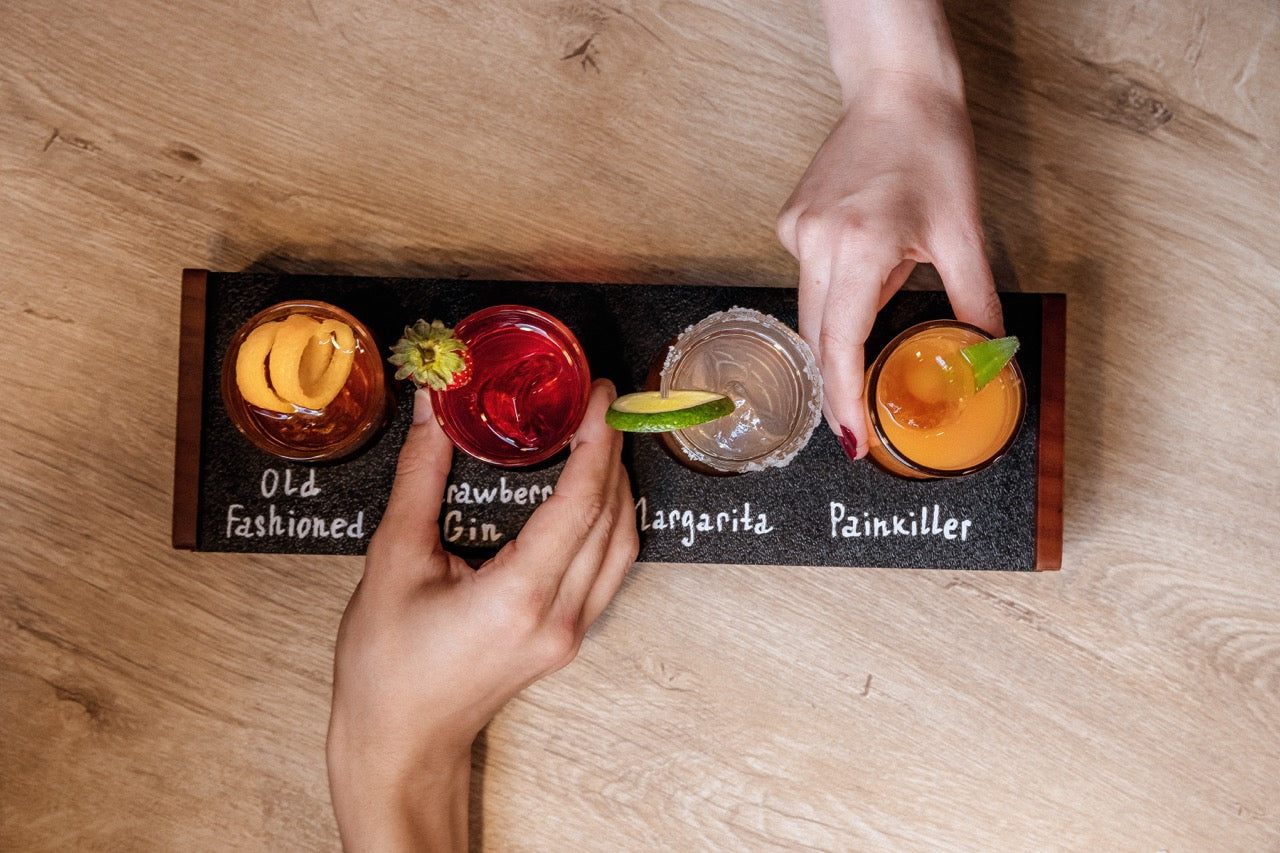
If you’re looking to add some excitement to your next gathering, why not try a game where your guests guess...
- August 08, 2024
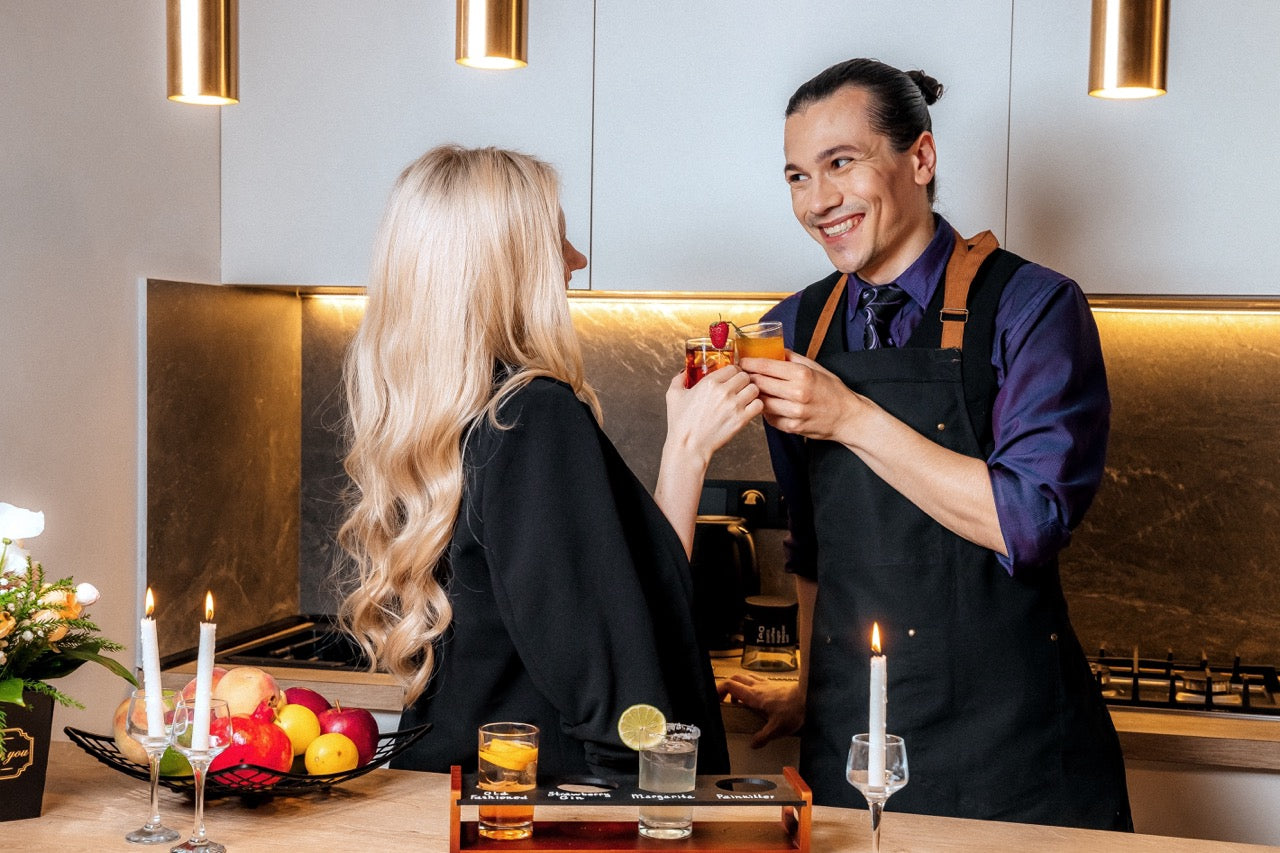
Date nights at home don’t have to be ordinary. In fact, with a little creativity and a cocktail flight board,...
- Choosing a selection results in a full page refresh.
- Opens in a new window.