

A tasting room sells two things at once: what is in the glass, and how it arrives at the table. The second one is doing more work than most operators give it credit for — and it is the cheaper of the two to improve.
This guide covers drink and flight display for wineries, breweries and distilleries: what the trade currently pays for it, how many pieces a tasting bar actually needs, and where the KSESTOR range fits for a room buying in quantity.

Flights are a menu category again
Restaurant Business reports drink flights "having a resurgence, with TikTok leading the charge," citing Millers All Day in Charleston selling a Bloody Mary flight at $28 and a mimosa flight at $32. NIQ's 2026 on-premise outlook puts it more broadly: "small-format cocktails and curated flights are scaling from niche to mainstream menu features."
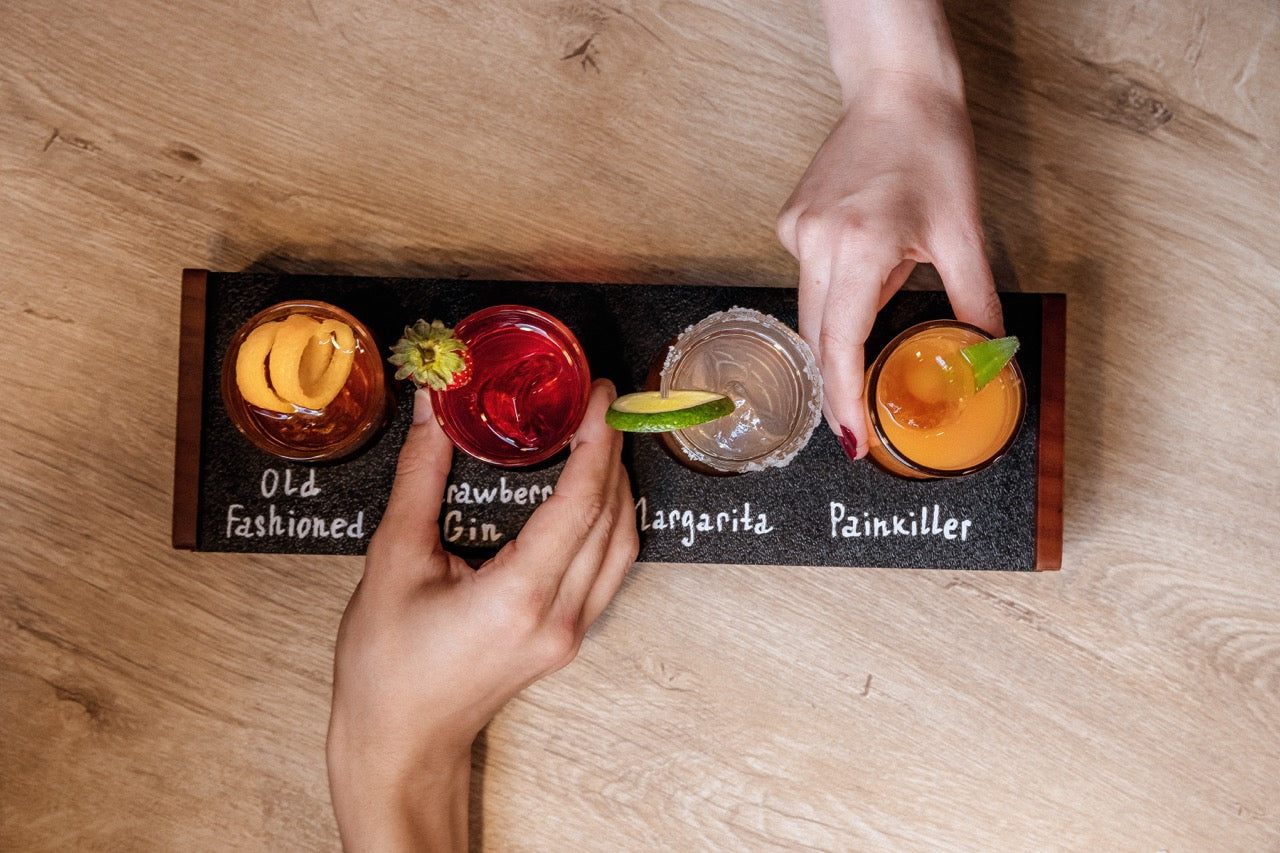
Presentation is the whole mechanism. A flight served on a bare bar top is four drinks. The same flight on a board is a menu item people photograph — and in a tasting room, where the visit itself is the product, that difference compounds into merchandise sales and club signups.
What the wine trade currently pays for display
This category already has a wholesale market, and it is not cheap. Wine-n-Gear, which supplies tasting-room merchandise, lists a 12-glass, 3-tier cocktail tree stand at:
- 50+ units: $162.50 each
- 100+ units: $150.00 each
- 250+ units: $137.50 each
- 500+ units: $125.00 each
Their 4-stemmed variant runs $119.95 at the 50-unit break down to $79.95 at 500, and names its buyers directly: "bars, restaurants, event planners, and wine enthusiasts."
Those prices include custom logo imprinting, which KSESTOR does not offer — so this is not a like-for-like comparison. But it establishes two facts worth knowing. Businesses in the wine and spirits trade demonstrably buy this product category. And the published entry point in that channel is a 50-unit price break, with smaller quantities available only by inquiry — a real hurdle for a single tasting room that needs six.
Trade pricing: 15% off 5 or more, 20% off 10 or more
KSESTOR applies trade pricing automatically. Order five or more units and 15% comes off at checkout; at ten or more it becomes 20%. There is no code to enter, no application, and no minimum order beyond the five units that trigger the first tier. The discount is driven by the quantity of units in the cart.
- 1–4 stands: $36.99 each
- 5 stands: $157.21 total (about $31.44 each), saving $27.74. Displays 60 glasses.
- 6 stands: $188.65 total (about $31.44 each), saving $33.29. Displays 72 glasses.
- 10 stands: $295.92 total (about $29.59 each), saving $73.98. Displays 120 glasses.
- 12 stands: $355.10 total (about $29.59 each), saving $88.78. Displays 144 glasses.
- 24 stands: $710.21 total (about $29.59 each), saving $177.55. Displays 288 glasses.
Unit figures are the effective per-stand price after the discount is applied to the order total. The same pricing applies across the KSESTOR Champagne Tower, Drip Tray, Drink Flight Board, Cocktail Flight Glasses and Beer Flight Glasses — so a tasting room outfitting a bar can reach either tier across the range rather than on a single item. Orders of $50 or more ship free within the US and stock ships in one business day.
How many pieces a tasting bar needs
Tasting rooms buy differently from event businesses. You are not sizing for one Saturday; you are sizing for a bar that runs the same service every weekend.
- Flight boards: one per active tasting position, plus 30–50% spare so service continues while boards are being cleared and wiped. A six-seat bar runs comfortably on eight to nine.
- Drink display stands: two to three per service point. One holds the poured-and-waiting flight glasses, one stages the next round, and a third covers the patio or a second bar.
- Events and club releases: a release weekend or a private hire typically needs four to six stands to stage a welcome pour without a queue at the bar.
Most rooms land between six and twelve pieces across the range — comfortably past the five-unit threshold, into the 20% tier at ten, and still well below the published 50-unit wholesale break.
Durability and cleaning in a daily-service room
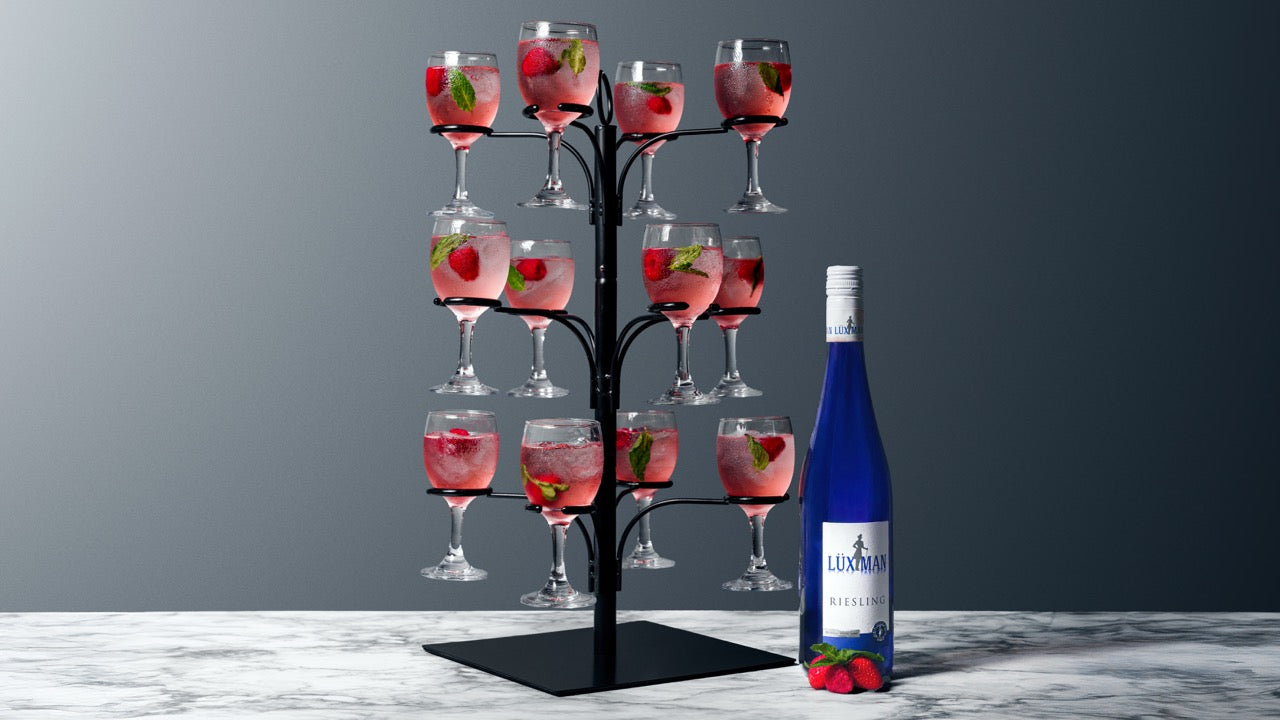
A tasting room handles equipment harder than an event business does. The stand is built from metal with welded branches rather than screwed-together tube, holds up to 12 glasses, and carries KSESTOR's lifetime warranty against defects in materials and workmanship under normal use — register the product to activate it; accidental damage and misuse are not covered.
Cleaning is deliberately simple. In normal use the stand supports glasses by the stem and does not contact the drink, so it is a display piece rather than service ware. KSESTOR specifies hand cleaning only: wipe with a damp cloth, use mild soap and water if needed, and do not submerge it. It never enters the glasswasher queue, so it goes back on the bar as soon as it is wiped rather than waiting on a drying rack.
Hand cleaning is common for front-of-house display pieces. Cal-Mil, which supplies catering display to hotels and caterers, gives the same instruction on its acrylic range: "we recommend a gentle hand-wash and to avoid abrasive cleaners or dishwashers."

If you also have a gift shop
Tasting rooms with retail space are in an unusual position here, because the same item works on both sides of the room. Faire's barware buying guide reports that alcohol retailers order in noticeably larger quantities, typically around six units per brand per order, against roughly four for gift shops. Cafés and restaurants go deeper still — Faire calls them the largest-quantity buyers of any store type.
A guest who has spent an afternoon drinking from a display they liked is the easiest retail conversion in the building. Stocking what you use is a shorter path than sourcing something new, and combining floor stock with service stock is the simplest way to reach the ten-unit tier.
Specifications
- Tiers: 3
- Capacity: up to 12 glasses
- Maximum glass height: 9 inches
- Dimensions: 9.05" D x 9.05" W x 19" H
- Material: metal with welded branches
- Assembly: tool-free, screw-on
- Care: hand wash only — wipe with a damp cloth, mild soap and water if needed, do not submerge
- Warranty: lifetime warranty against defects in materials and workmanship under normal use
- Price: $36.99 per stand, about $31.44 at five or more, about $29.59 at ten or more
- Shipping: free on orders of $50 or more within the US; ships in 1 business day
Common questions
Where do wineries and tasting rooms buy drink display stands?
Two routes exist. Wholesale suppliers to the wine trade such as Wine-n-Gear list 12-glass, 3-tier stands from $125 to $162.50 per unit with custom logo imprinting, with a published 50-unit price break and smaller quantities by inquiry. KSESTOR sells the same format direct at $36.99, dropping to about $31.44 at five or more units and about $29.59 at ten or more, with no minimum order and no branding option.
Is there a bulk discount for tasting rooms and bars?
Yes. KSESTOR applies 15% off automatically on five or more units and 20% on ten or more, with no code and no application. The discount covers the Cocktail Tree Stand, Champagne Tower, Drip Tray, Drink Flight Board, Cocktail Flight Glasses and Beer Flight Glasses, so a tasting room can reach either tier across the range.
How many flight boards does a tasting room need?
One per active tasting position plus 30–50% spare, so service continues while boards are cleared and wiped. A six-seat bar typically runs on eight to nine.
Does a drink display stand need to be NSF certified?
NSF certification is not required by the FDA Food Code itself. The Code provides that equipment certified or classified for sanitation by an ANSI-accredited certification program is "deemed to comply with Parts 4-1 and 4-2" — a safe harbour, not a mandate. Whether a bar-top display stand falls within the Code's definitions of UTENSIL or EQUIPMENT is a judgement for your regulator, not for us. Check your local health department's requirements before specifying, since state and county rules vary.
Can a cocktail tree stand go through a glasswasher?
No. KSESTOR specifies hand cleaning only — wipe with a damp cloth, use mild soap and water if needed, and avoid submerging it. Because it supports glasses by the stem in normal use rather than contacting drinks, it is a display piece rather than service ware and does not need to enter the wash cycle.
What size glasses fit?
Stemware up to 9 inches tall, which covers standard champagne flutes, coupes and most tasting stemware. Measure your house glass before ordering if you use a taller pour.
Outfitting the room
Display is one of the cheapest levers a tasting room has. A six-piece order at $188.65 changes how every flight and every welcome pour lands; ten pieces at $295.92 does it at the better rate. Either ships in one business day.
Featured blogs
- February 25, 2025
Discover essential tips for selecting the ideal cocktail tree stand. Enhance your gatherings with the perfect setup. Read the guide...
- August 08, 2024
If you’re looking to add some excitement to your next gathering, why not try a game where your guests guess...
- August 08, 2024
Date nights at home don’t have to be ordinary. In fact, with a little creativity and a cocktail flight board,...
- Choosing a selection results in a full page refresh.
- Opens in a new window.